
I am two days into a five-day fast. Started Friday, no food until Tuesday. I do this every month, the first through the fifth. The goal is autophagy, the cellular cleanup process where the body recycles damaged proteins and worn-out organelles when nutrients run out.
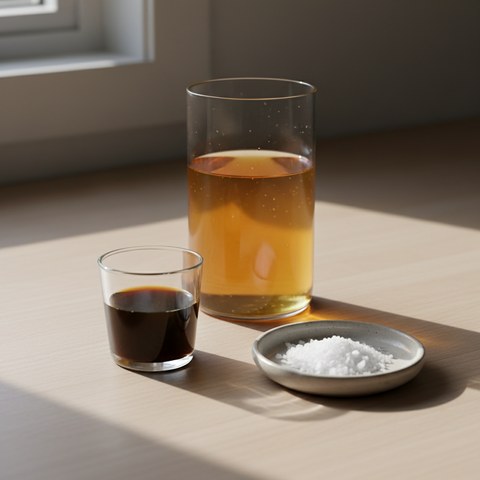
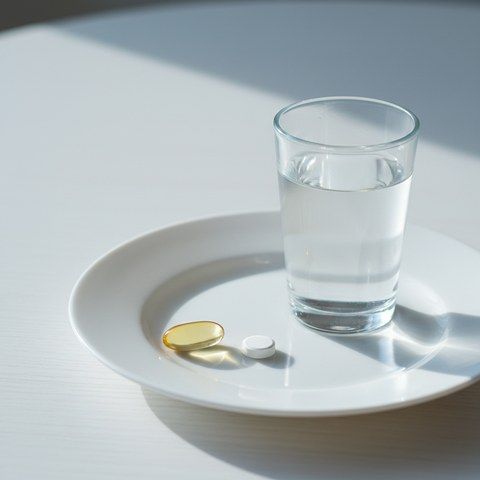
What goes in: black coffee, sea salt, apple cider vinegar. All three combined in a single glass, because making three separate sittings would require more morning than I have. The flavor lands somewhere between industrial cleaner and stale espresso. I am a caffeine addict, and the caffeine outvotes the taste buds. It always does. A multivitamin and a fish oil capsule with the rest of it. The fish oil technically has calories. I take it anyway. The vitamin is closer to zero.
This post is the receipts for one full attempt.
What autophagy actually is
Autophagy is the cellular self-recycling process Yoshinori Ohsumi mapped in yeast in the 1990s, work that earned him the 2016 Nobel Prize in Physiology or Medicine. When a cell runs short on nutrients, it walls off non-essential parts (misfolded proteins, exhausted mitochondria, general molecular debris) inside small membrane bags called autophagosomes, then digests them and reuses the building blocks. The cellular equivalent of cleaning the garage when the renovation budget is gone.
The marker researchers track most often is LC3B-II, a lipidated protein that gets recruited to autophagosome membranes when the process is active.
In humans, after a 72-hour fast, LC3B-II in skeletal muscle increases by about 30 percent compared to pre-fast levels (Vendelbo et al., PLOS ONE, 2014). mTOR phosphorylation, the main upstream brake on autophagy, drops by around 50 percent in the same study. Both signals point in the same direction. The numbers are modest in muscle and bigger in liver in animal studies. Tissue-specific. Not every organ joins the cleanup at the same speed.
Most of the more dramatic autophagy claims in the popular fasting literature are extrapolated from cell cultures and rodent studies. The popular figure that “peak autophagy” lands at 72 hours is animal-derived. Solid human data on optimal timing is genuinely thin. I am running an n=1 with my own cells.
What goes in the cup
Three things, all roughly zero calorie.
Black coffee. Pietrocola et al. (Cell Cycle, 2014, “Coffee induces autophagy in vivo”) found that both caffeinated and decaffeinated coffee triggered autophagic flux across multiple organs in mice within one to four hours, mediated by polyphenols and not by caffeine itself. mTORC1 inhibition was observed alongside. The takeaway: coffee at minimum does not break the fast, and probably nudges the autophagy needle in the right direction.
Sea salt, dissolved in water. Once insulin drops and glycogen depletes (24 to 48 hours in), the kidneys flush sodium more aggressively, a process called natriuresis. Most extended-fasting protocols replace 1.5 to 2.3 grams of sodium per day for this reason. Skipping the salt is how you get the headache and the lightheadedness people mistakenly blame on the fast itself.
Apple cider vinegar, one tablespoon, diluted. Calories: trivial. The blood-sugar and insulin-stabilization claims in the popular literature are real but small. I include it more out of habit than confidence. The honest version: it is not breaking the fast, it is also not transforming the fast.
The morning capsules
A multivitamin: minimal calories, well below the threshold that flips autophagy off.
A fish oil softgel: roughly nine calories per gram of fat. A standard one-gram capsule will technically register as food intake. Whether that one capsule is enough to abort the fasted-state metabolic switch is debated and tissue-dependent. The conservative reading is that a single morning capsule does not undo the day. I am not optimizing for purity. I am optimizing for not breaking my joints in the second half of life.
The contradiction
I still smoke. I still vape sometimes. I am writing this between cigarettes.
The science is clear and unkind on this part.
Tobacco smoke and nicotine impair autophagy in airway and lung cells through oxidative stress, leading to the buildup of cellular junk (aggresomes) that the body should have cleared. This is one of the central mechanisms in the pathogenesis of chronic obstructive pulmonary disease.
E-cigarette vapor produces the same kind of autophagy impairment and aggresome formation in airway cells (Shivalingappa, Hole, Van Westphal, Vij. “Airway Exposure to E-Cigarette Vapors Impairs Autophagy and Induces Aggresome Formation.” Antioxidants and Redox Signaling, 2016).
The flavored vapes I sometimes pick up come with sweeteners. The cephalic phase insulin response (a small insulin bump triggered by sweet taste alone, no calories required) is real for some people on some sweeteners; the literature on this is genuinely mixed. Whether vape sweetener inhalation registers a similar response in fasted humans is not well studied. The honest answer: probably small if it exists, possibly real for some people, but not the cellular cleanup signal I came for.
So while the fast is pulling for autophagy at the systemic level, the cigarette is dragging it backwards in the lung tissue most exposed to the smoke. The right move is to stop. I have not stopped. The blog reports what is, not what I wish.
Why bother, then
Two reasons.
The first is that autophagy is not the only thing happening in a fast. Insulin drops, growth hormone rises, ketones become available, the gut gets a break from digestion, fasting glucose curves flatten on refeed for days afterward. None of those are nullified by the cigarette.
The second is that an imperfect attempt at the right thing still beats a perfect commitment to the wrong thing. The fast is a reset. The reset is not invalidated because the smoker is the one running it.
What this post is
Not advice. Not a protocol. A daily log entry for the public record. The system on the rest of this blog will resume tomorrow morning with food and numbers, the AI doing the writing. Today the system is me.
Day two of five. Receipts on the rest as they come. Next run starts June first.