
Everyone wants the same thing from AI. Money that shows up while they sleep.
A machine that trades on its own and just runs. Actual passive income, not another side hustle that needs babysitting.
I built it. Three of them, actually.
Here is the part the gurus leave out. The old road to that dream is brutal. Years of learning to code. A trading edge you have to prove before you risk a single cent. Then months of forward testing that usually whispers back that the edge was a ghost. Delete it. Start over. Again.
I am the last person who should have pulled this off. I have bled money trading for years. I have never written a line of code.
I still stood up three automated trading systems in a matter of weeks.
The skill was never coding. It was never trading either. It is knowing exactly what to tell the machine, and refusing to stop until it gets it right. I direct, I do not type. Years of bossing programmers around transferred cleanly to bossing AI around. Same job, fewer meetings.
You can try this yourself. A lot of people are about to. Most will learn, fast, that the engine only goes as far as the hand on the wheel.
Let me show you mine.
How I got here
People assume I caught this wave a few months ago. I caught it in 2023. ChatGPT was the new toy the whole internet was prodding, and I never put it down.
Image generation pulled me under next, and I stayed a while. Stable Diffusion first, back when you had to wrestle it for a clean frame. Then Grok, ChatGPT’s own image engine, Flux, Z-Image Turbo, nano banana. Then the video models showed up: Veo, WAN. Every few weeks something sharper dropped, and I lined up for each one.
It is fun, and it pays its way. Thumbnails, marketing shots, the kind of work that used to mean hiring a designer or renting a render farm. nano banana still retouches the food photos on this very blog.
But I never mistook the toy for the prize. A picture has a ceiling. A clip has a ceiling. The language model does not, none I have hit yet. The images were the fun. The words were the money. Everything past this line got built with the model that reads and writes, not the one that draws.
Back in February I fell into Openclaw. The internet was screaming about AI armies, whole companies of agents that run themselves while you sleep. I opened it up and found a chatbot I could text. That was the whole magic trick.
So I went hunting for a real problem instead of a fantasy. Months of prodding. The thing ordinary chatbots could not do was remember me. So I kept sharpening the rules until it could. A personal accountant and health coach that actually holds context. That was my first taste of agentic AI.
Then I heard Claude could code. I had no app in mind, which is a strange way to begin. I paid the twenty dollars anyway and aimed it at a chore I repeat every week.
It worked on the first try.
That feeling was not new. Early in my animation career I was handed a Maya pipeline and told to make it run in 3ds Max. I did not write the port. I told a programmer the logic, and he wrote it. Same move here. Describe the logic, let the machine type.
So I kept pushing to find the wall. I have not found it yet.
Two websites, this one and Sqowopz, a day each to stand up and a few more to polish. An alter-ego site for a book I published, upgraded too. A personal shop on WooCommerce, half-built and parked. Social posting that runs itself. And because a “what if” would not let go, six game prototypes, all of them playable. They are on Sqowopz if you want to poke at them.
By then I understood how these agents think. Which left the only question that pays.
How do I actually make money with them?
Trading
I have traded on and off for years, and the scoreboard is embarrassing. I know exactly why, too. Knowing and doing are different sports. Real trading needs the discipline of a monk and the nerve of a surgeon. There is a reason brokers print “around 90 percent of traders lose money” on their own front page. They are not bluffing.
My boss trades full time, and he walked me through the worst of it. The life is a dream: chart at the open, check the damage after lunch. He runs bots now, so greed and panic never get a vote. But building those bots takes code and a proven edge. I had neither. I tried the off-the-shelf ones. Most just flip direction to chase a loss and lean on martingale, which is wonderful if you own a bottomless wallet. I do not.
With AI in the chair, the wall I could never climb was suddenly gone.
This is why I went quiet here for a while. I built three trading systems across three markets: forex, commodities, and crypto. I backtested thousands of strategies on three engines and stress-tested them three ways. Before AI, that was years of work and a skill set I do not own. Each one took me a few days, front to back.
The rapid scalper
First one is a 30 to 60 second scalping beast for fast, short-window brokers. They give you nothing but a web page, so the bot drives the web page.
I wired up three brokers. It outran my expectations on day one. It fires in bursts, hundreds of trades at a time. One broker took 60,000 trades in a single day. The other two throttle me to a few thousand. The point was never to get rich on these clicks. The point was to gather enough trades to know the truth.
It has now logged over a million.
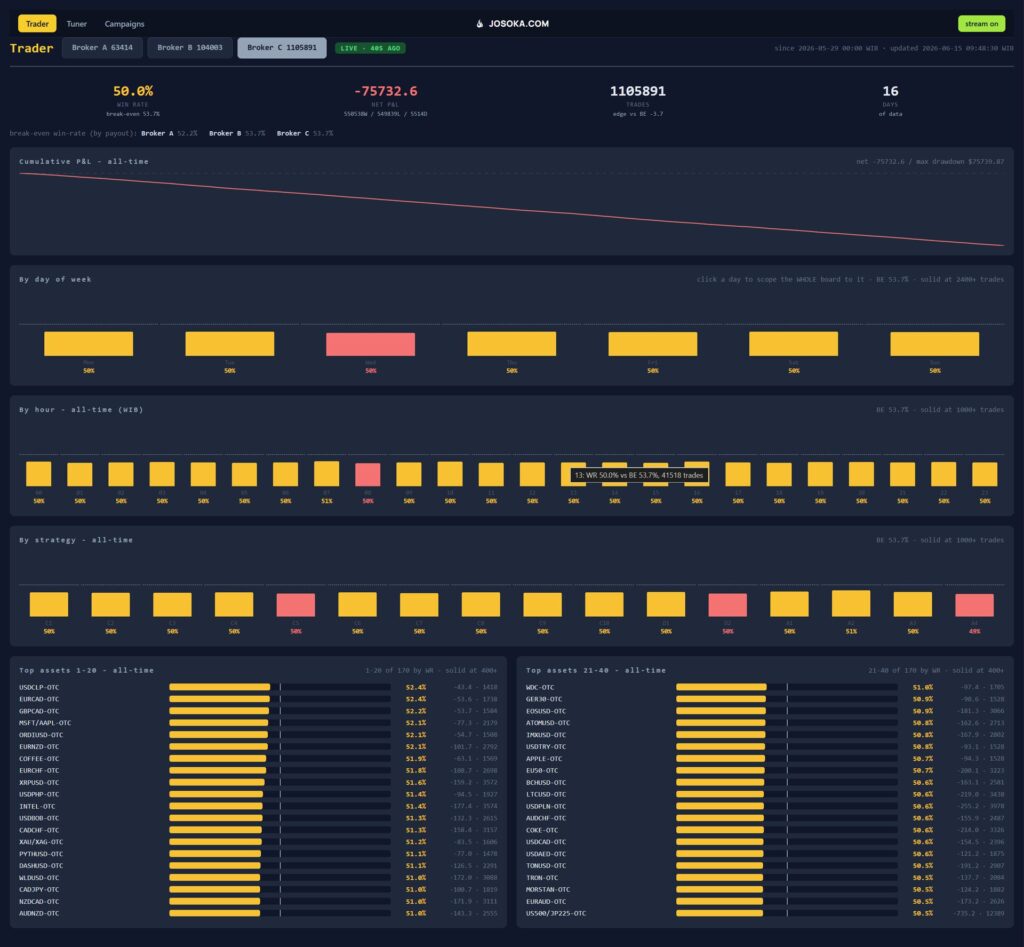
That is the truth, and it is brutal. Every promising asset, day, and hour collapses to 50 percent once the sample gets big. And 50 percent does not break even: every trade pays fees and costs, so a coin flip slowly bleeds money. So I built a tuner.
The tuner hunts the pockets where the edge survives. Good hours, good assets, good direction. It slices the same data four ways: by hand, a sweep from the finest slice to the broadest, a Wilson score lower bound for the cautious cut, and a pass that lets a model reason over the rest. Do not ask me to explain what a Wilson score is. I asked for the most paranoid way to trust a win rate, the AI reached for that one, and I nodded like it was my idea.
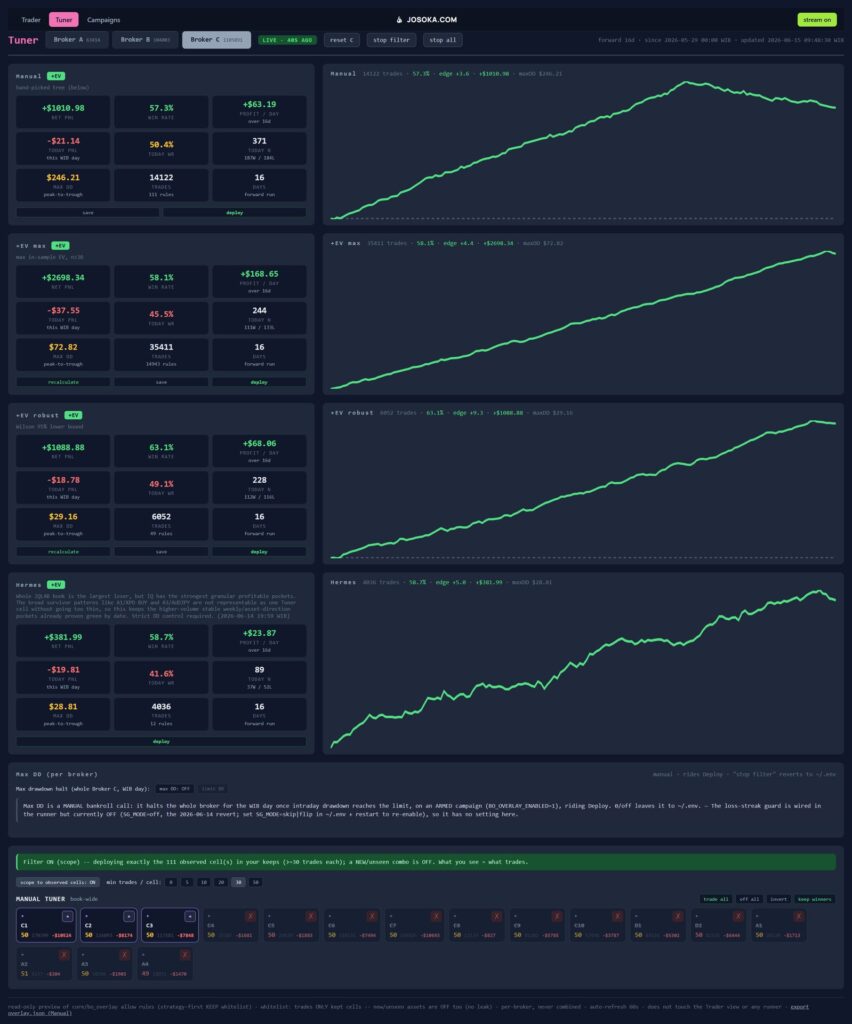
Now I let the filters run for a month or two and report back. If any of them hold without falling apart, this turns into income I never have to touch.
Crypto
Once I knew I could push that many trades through a custom bot, the next question wrote itself. What about leverage?
So I built my own Hyperliquid front-end. Cleaner than the original, easier to drive.
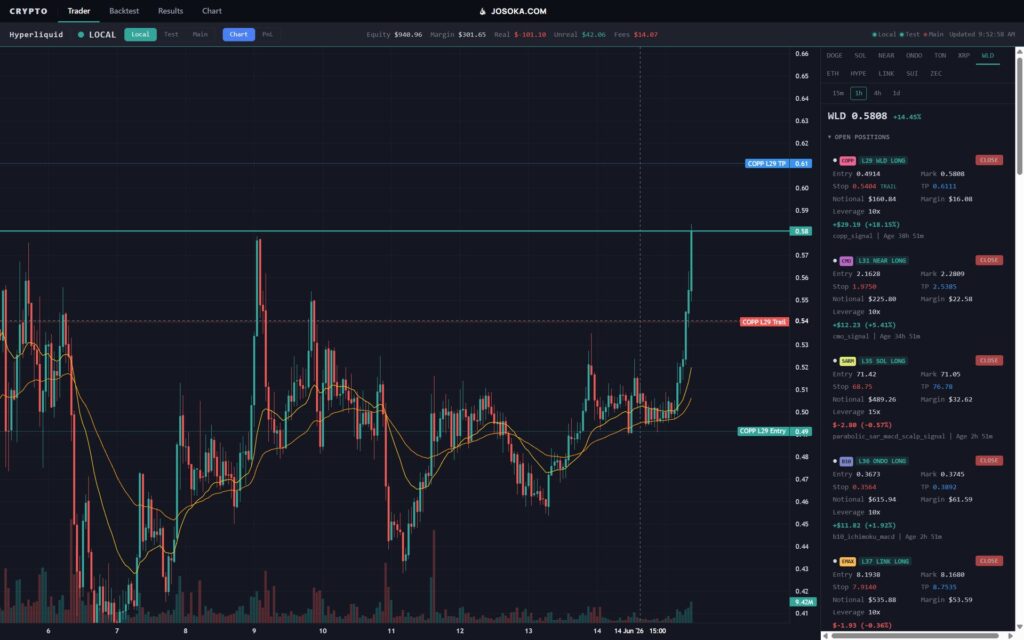
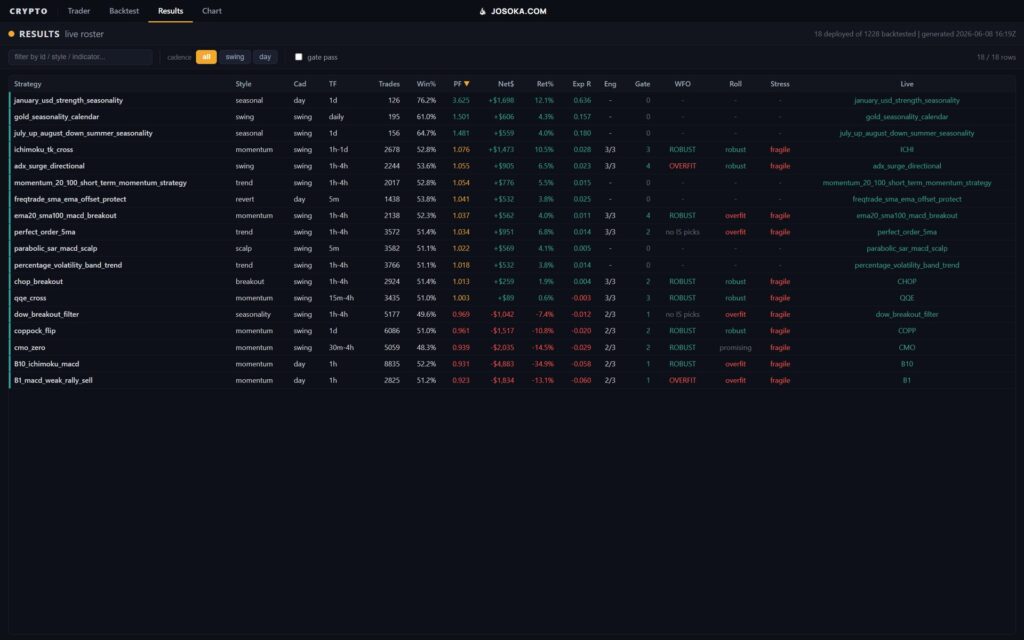
Then I fed it the firehose. Around 1,200 strategies, six years of candles, every coin.
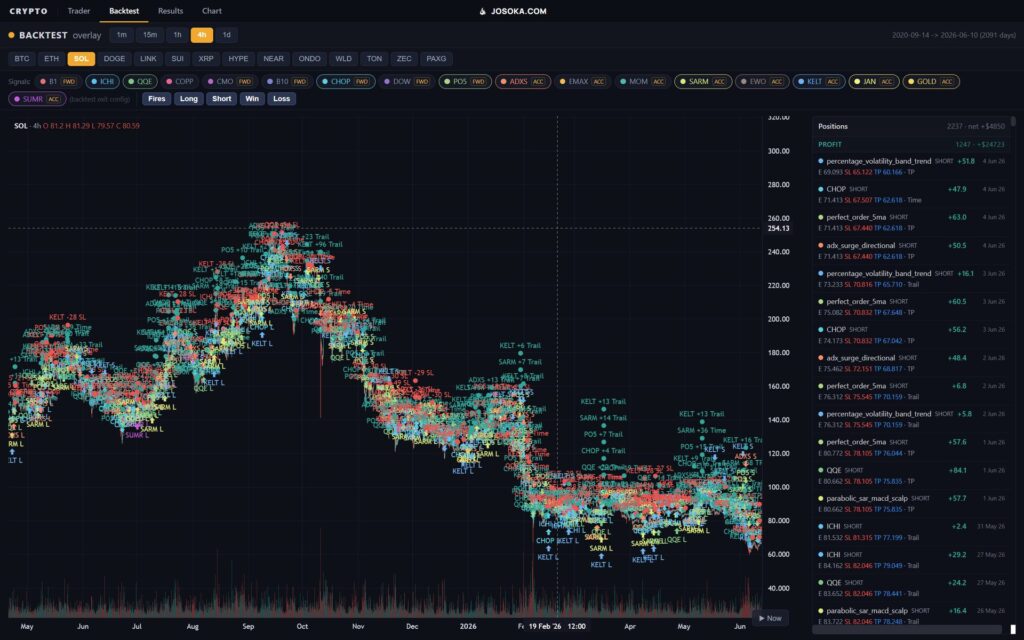
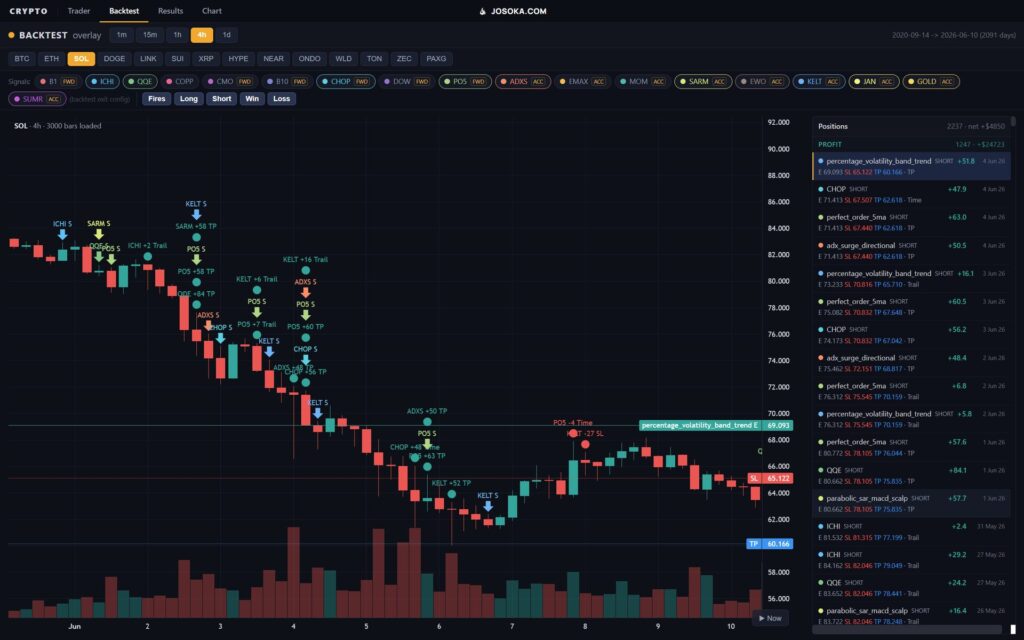
Most die. A handful do not. The survivors have to clear a gauntlet of backtests and stress tests before they go anywhere near real conditions.
Here is the part that still does not sit right with me. Generating those twelve hundred strategies, backtesting every one against six years of candles, then dragging the survivors through the stress tests. That was a day of work. Two at the outside.
The conventional way, this is a quant desk. People who price derivatives for a living, a data budget with a comma in it, and a calendar measured in quarters. One self-taught trader doing it alone does not finish in a year, and probably never finishes at all. I am not smarter than that desk. I rented the same horsepower and aimed it.
Why Hyperliquid? No KYC, no document uploads, no theater. Your wallet holds your funds the whole time. I could wire this to Binance, KuCoin, OKX, any exchange with an API. But why bother. Fund the wallet, trade.
Right now everything is forward testing, and I watch it in real time.
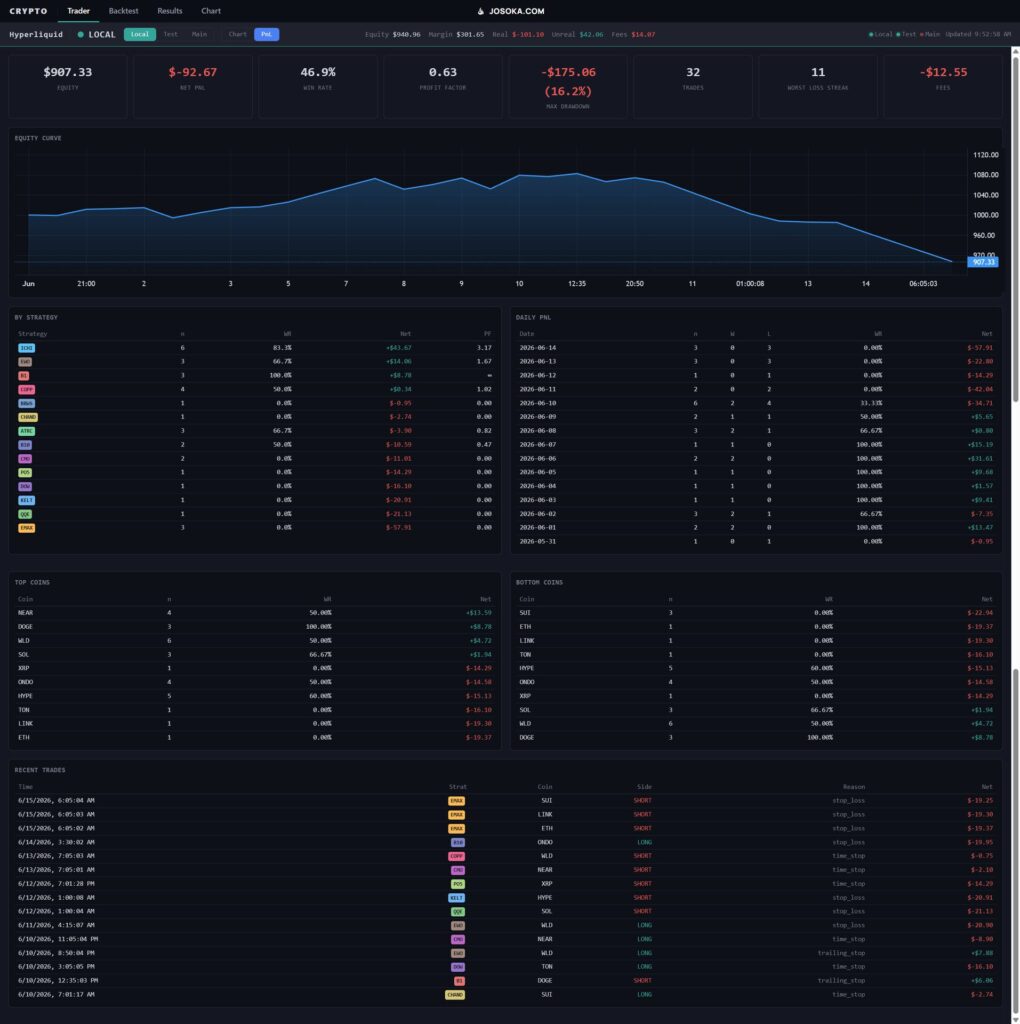
One problem bit me. Hyperliquid’s testnet chart does not match its mainnet chart, so testing against it would teach the bot the wrong lessons. The fix was to feed it the real mainnet chart and run a local engine that mimics the exchange. Truth in, clean verdict out.
Forex
After crypto I figured the same method would carry to forex. I went looking for on-chain forex and commodities and landed on Ostium.
I built it carefully. Cleaner modules, better thought out, the most mature version of the framework. Then the backtests came back, and none of the strategies were worth chasing. A few dozen survived in the black, but “the black” meant a couple hundred dollars over more than a decade.
So I shelved it. I put the whole thing on GitHub anyway: https://github.com/fjosk/forex_public
Call it the real v2 of my framework, unlucky enough to be born in the one market that refused to pay. Port it to Hyperliquid if you like. I thought about moving my own trader onto it, but mine is forward testing and behaving. If it is not broken, I am not touching it.
So
This is the closest thing to real passive income I have found that does not require lying to myself. Build the system, prove it, let it run. I am not chasing the cartoon returns from trading YouTube. Beat a term deposit and a stock index, and I am happy.
It cost me something, and not in money. When I lock onto a build, everything else goes dark. This blog went quiet. The health log stopped cold. My gym membership quietly turned into a donation. I cannot leave a system half-finished and still sleep, so I stopped sleeping. Call it perfectionism if you want the kind word. The flaw underneath is the same: I do not rest until the thing runs the way it should. The systems are forward testing on their own now, no hands on the wheel, so next month I get my life back. July, the blog and the body both go back on schedule.
Here is the part that is easy to miss. The AI is the cheap part. You and I rent the same models. What actually decides the outcome is the steering: turning a vague idea into instructions a machine can build, catching it when it is confidently wrong, and pushing until the thing works instead of almost works. A model is only as good as the person aiming it.
That took me months to get a feel for, and I am still learning it. But it is the part that matters, and the part that does not come in the box.
The bots have kept running since I wrote this, and I have been posting how they hold up. Here is the latest: AI Trading Bots: Iteration and Testing Progress.